In the midst of a budget crisis, Jersey City is leaving $100M on the table
Jersey City has a big budget problem, and residents are right to be furious. The city also has a parking problem that has aggravated residents for a long time. We dug into the numbers and it turns out there is a way to fix both.
Through parking reform Jersey City could generate between $45 million and $100 million a year.
That’s money sitting on the table that could dramatically reduce a property tax increase and prevent deep cuts or layoffs without passing the buck along to homeowners and renters.
It would also help solve the parking crisis by properly managing public curb space more effectively and creating safer conditions on our streets.
Prioritize Enforcement
Let’s go over some numbers: last year, Jersey City collected nearly $11 million in municipal court moving and parking enforcement revenue, but in 2019 with a smaller population than today, that figure was almost $17 million.
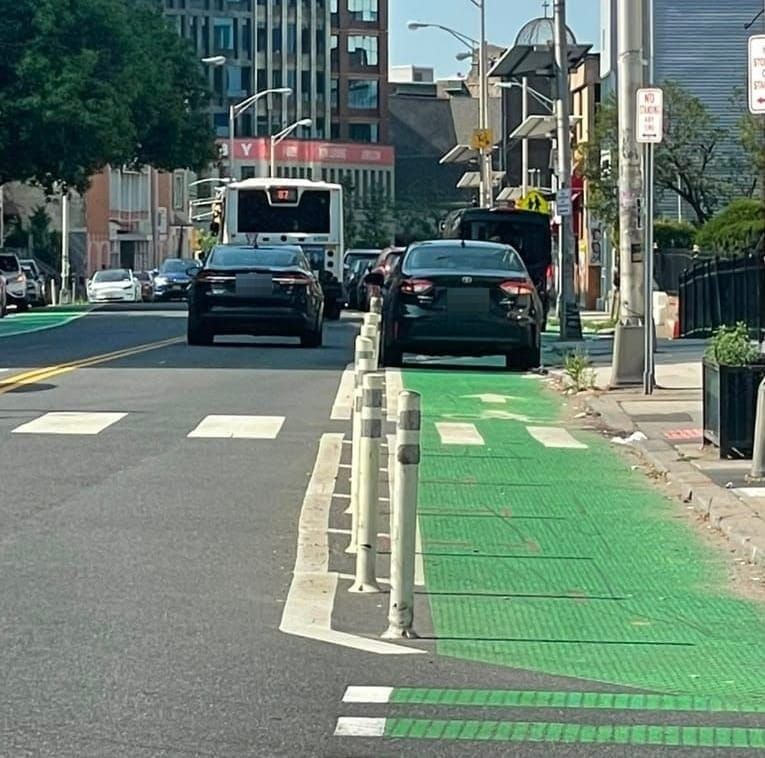
We are enforcing the law less than we did six years ago. Restoring parking meter enforcement alone could easily add another $1-2 million. Enforcing illegal parking that creates unsafe conditions could add another $8 million or more.
This isn’t a tax increase—it’s asking people who break traffic rules and are putting others in danger to actually pay their tickets. Follow the rules, prioritize safety, and avoid the costs. It becomes a choice.
Update Parking Meter Rates
Meter prices are outdated and have been badly underpriced relative to inflation and increase in demand. Meter rates should be adjusted for inflation and the increase in land value.
Proper meter pricing will also ensure car turnover to support deliveries and small businesses. Hoboken raised $7.3 million from meters, while Jersey City—a city six times the population of Hoboken—only raised $600,000 last year.
We estimate Jersey City should be able to raise another $10-20 million a year in increased meter fees and expanded metered zones.
Current On-Street vs. Off-Street Parking Costs
Only about half of Jersey City households own a vehicle and of those, a large portion pay for their own off-street parking.
But for those that park on the street, it is a constant source of frustration across the city, and it is also an unconscionable giveaway during a budget crisis.
A parking study by Jersey City, found there are roughly 60,000 on-street parking spaces. Residents pay $20 a year—that’s $1.66 per month—to store their vehicle on public land in designated zones.
Those zones, though, only cover about 105 miles of curb parking, according to the city’s study. There are another 105 miles across the city, with access to light rail and bus service, where there are no residential zones and it is completely free to park.
Meanwhile, off-street parking can cost $3,000 on average and upward of $5,000 per year. That means on-street parking is more than 99% subsidized—a roughly $200 million giveaway, disproportionately benefiting the households street parking multiple vehicles.
And there is good precedent for charging reasonable permit fees: recognizing the high demand, Jersey City municipal lot permits already cost between $70-$105 a month.
Homes and buildings may be built with off-street parking, but in the parts of the city without permit zones, it’s currently possible for residents to double-dip and avoid buying a spot or a monthly parking fee by taking up curb space nearby at little or no cost.
Citywide permit zones would help fix this issue. Free parking isn’t free.
It incentivizes car ownership making parking worse, contributes to traffic and aggressive driving as drivers circle for spots, and detracts from investment in things critical to the health of dense, urban environments like public transit and pedestrian safety.
Worse, these hidden costs are passed on to everyone—including those who don’t drive—in the form of higher housing prices, reduced public space, increased pollution, and severe injury or death due to crashes.
Expand Residential Zones and Increase Curb Parking Costs
By expanding residential parking zones and updating permit costs to $20 per month for the first vehicle per household, $40 per month for a second vehicle, $80 per month for a third vehicle, and $100 per month for non-resident parking permits, the city could raise tens of millions of dollars a year while also making parking more available and more convenient.
Some households may decide it’s not worth maintaining and paying for additional cars, instead adapting routines that result in carsharing or using public transit.
Those cars without proper license plates or out-of-state registration and seldom used hobby cars may make their way off the street and free up parking spots for drivers who need their cars for work.
People who don’t live in Jersey City, but take advantage of our free parking, may choose to park in lots or use public transit closer to their homes instead of taking up our parking.
Update Commercial License Fees
Even small reforms add up. The annual parking-lot license charged to commercial operators hasn’t meaningfully changed since the 1990s—still just two-and-half cents per square foot while land values and parking rates have exploded.
Adjusting it for inflation and parking demand could yield $5 million from parking businesses, not from you. A modest food-delivery fee, expanded streateries, and more EV charging stations could contribute millions more.
Cities across the country and right next door are already doing these things. Jersey City’s own parking management strategies from 2020 recommended most of these changes.
What’s hurting all of us is $100 million going uncollected, then telling residents the only solution is a historic tax hike that would far exceed an extra $19 per month for a parking permit or a few dollars more per hour at a parking meter.
Before we raise taxes on homes by the thousands, let’s collect what we’re owed for the use of our public domain and price our public assets fairly.